Measurable Progress Charts
In every session, Obedience, Calmness and Focus are scored from 1 to 10; the weekly progress curve shows how far you have come with concrete data, free from subjective impressions.
Bu sayfa Türkçe de mevcut. Türkçe görüntüle →
Diese Seite ist auch auf Deutsch verfügbar. Auf Deutsch ansehen →

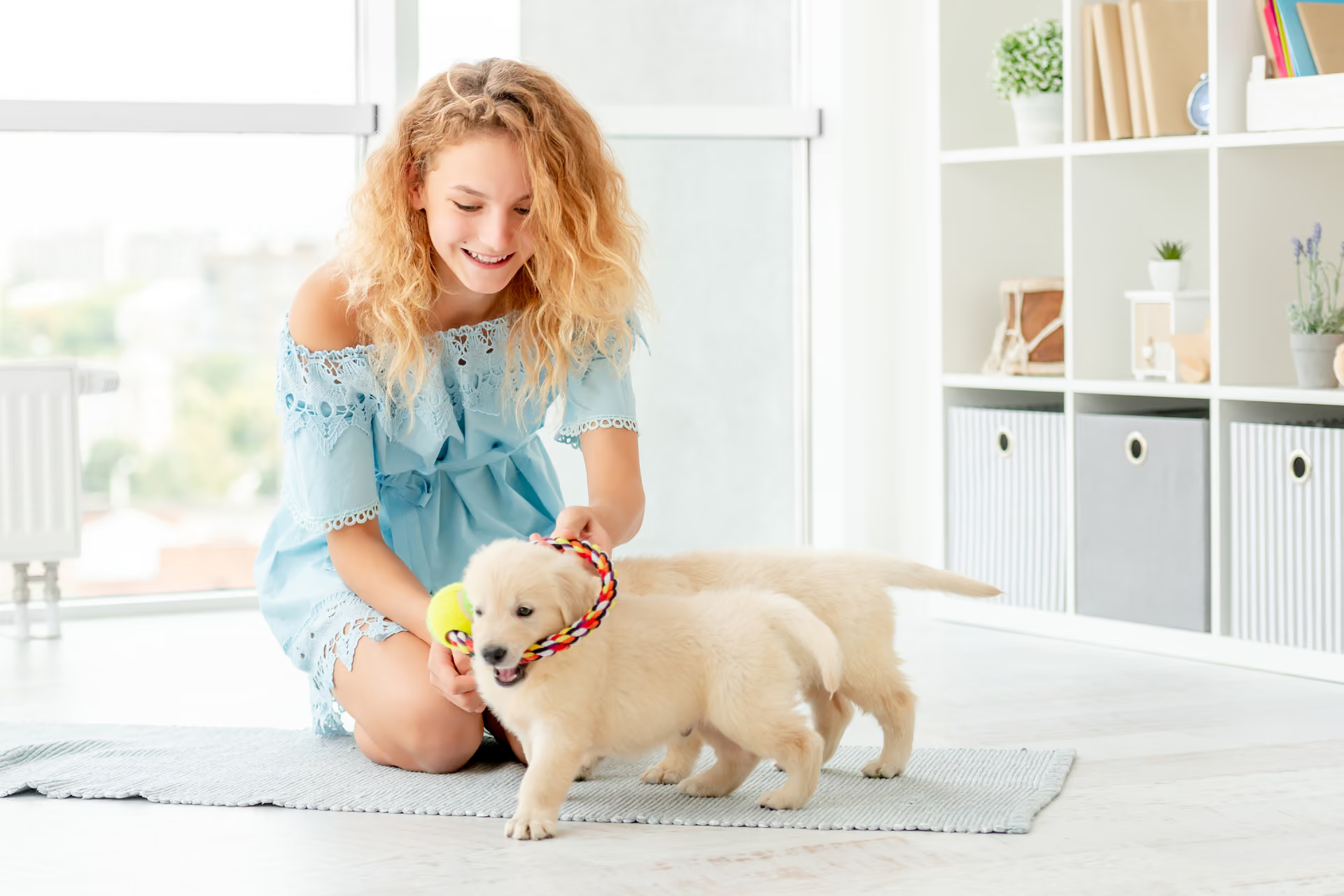
Families often choose to wait before seeking support, saying, "Let them settle in first, let them finish their vaccines." Yet nature’s clock starts its relentless countdown the moment those tiny paws step through your door.
Whether they will see the world as a safe place or as a sea of threats, and how deep the bond they build with you will be, is sealed into the foundations of their character long before they have even lost their baby teeth.
Right now, your puppy’s character is wonderfully eager to take shape, but over time this flexibility will give way to permanent habits. While they are still at the very start of the road, learning to see the outside world as a safe space to explore rather than a place of fear, and acquiring vital skills such as bite inhibition in the right window, will determine the future of their character.
The ability to stay calm that we help them develop during this period turns the bond between you from confusion into a peaceful partnership.
Remember: building a solid foundation from the start, with the right guidance, is the shortest path to preventing future problems before they ever form.
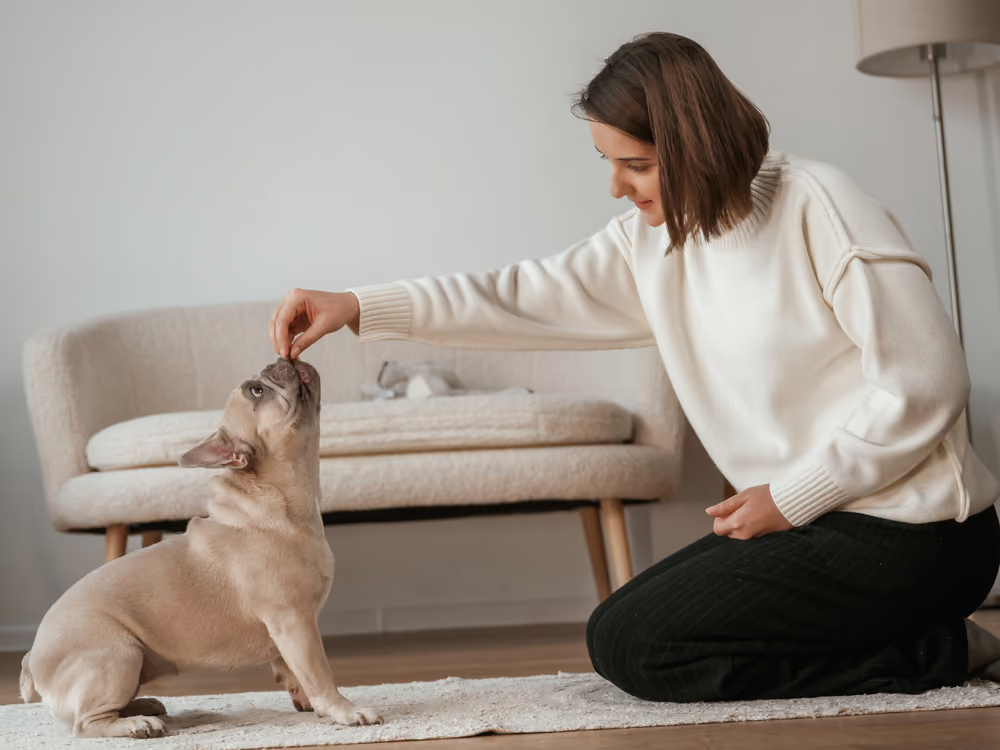
Here is what we will do together, step by step:
First, we look at your home’s layout through your puppy’s eyes. Where should the potty area go, where should they sleep, which belongings are at risk? To put an end to the chaos, we arrange your living space in a strategic way that won’t confuse them.
We end the mental confusion by making sure everyone at home speaks the same language. From hand signals to reward timing and the right body language, we show you everything hands-on. That way, when anyone at home says "no," your dog understands the same thing.
We don’t just suppress typical puppy issues like nipping at hands or hanging on to pant legs; we teach them how to control the strength of their jaws. This training becomes your greatest safety insurance against problems that might arise later.
When you are away or busy, we make sure your puppy can spend time peacefully in their own space, without worrying and without damaging belongings. Through the right kinds of mental enrichment, we stop separation anxiety and stress barking before they ever begin.
We don’t just take them beyond four walls; we introduce them to the different sounds, unfamiliar people and objects of the outside world without trauma. Cars, crowds and other dogs become not sources of fear, but ordinary details they can explore with confidence.
Training doesn’t end the moment our trainer walks out your door; real transformation and lasting learning happen in the days between sessions. That’s why every family that begins training with Dog Craft Academy follows the entire process transparently and tangibly, on a single screen, in their personal DCA Family Management Panel.
In every session, Obedience, Calmness and Focus are scored from 1 to 10; the weekly progress curve shows how far you have come with concrete data, free from subjective impressions.
Practice between sessions is broken down into daily steps. You mark each step as "completed" or "not completed"; your trainer sees the data instantly and updates their guidance.
Manage all your completed, planned and postponed sessions in one calendar, and request a new lesson simply by choosing the day and time that suit you best.
Notes on your dog’s character, momentary stress signals and the priorities of each session are kept on record. You always know exactly where you are in the process and what to focus on next.
As your journey progresses, your trainer adds content selected specifically for your dog’s behavioral profile and learning needs to your panel.
Write any question or situation that comes up directly into the system; we get back to you quickly with recommendations, right there in the system.
This way, no observation gets lost and no question goes unanswered. You and your trainer look at the same data and move toward the same goal, speaking a shared language.

As you build seamless harmony, there should be no question marks left in your mind. From how the process works to our training philosophy and the practical details you will encounter in daily life, we have gathered the most frequently asked questions for you.
Training begins the very second your puppy steps through the door. Contrary to popular belief, training isn’t just about "sit" and "stand" commands; it is about teaching the house rules, the potty area and boundaries, and about building harmony with your dog. Nature’s clock doesn’t wait: to make the most of the golden period between weeks 8 and 16, when character is permanently shaped, we should start the process as soon as your puppy comes home.
Mental health is just as vital as physical health. Keeping a puppy shut indoors until their vaccinations are finished can lead to fear, reactivity and aggression problems that are hard to undo later. By staying away from high-risk areas, carrying them outside in your arms, inviting safe guests over and creating controlled environments, we will manage the socialization process safely, in step with the vaccination schedule.
Treats are a temporary paycheck we use while teaching your dog a new language, not a bribe. Once a behavior is ingrained in the dog’s mind as muscle memory, we gradually phase out the food. Later on, the greatest rewards will be the natural motivators of everyday life: your affection, a toy or a door opening to go outside.
Absolutely not. Under LIMA standards, any physical intervention on a dog only destroys the bond of trust between you. If you use your hands as a tool of punishment, your dog learns to fear hands or to bite harder in self-defense. We use communication and the right redirection, never force.
Dogs love attention; even if that attention is shouting "stop it!" or pushing them away, they have succeeded in getting what they wanted: your attention. When they jump on you, turn your back and break eye contact, and give them attention the moment they have fully calmed down and all four paws are on the floor. Through this consistency, we teach them that the right behavior is staying calm.
If we are going to work together, we strongly advise against shopping blindly. Many products on the market may not suit your dog’s breed, energy or the layout of your home. After our initial analysis, we will prepare a shopping list tailored to you, with only what we truly need.
Of course. At Dog Craft Academy, our goal is not to teach you a few commands, but to offer guidance for life. Even after our in-person sessions end, our communication and guidance continue throughout your dog’s life. Because you are part of our family, we will always be just a phone call away.
Training isn’t an hour-long, military-style workout each day; it is a way of life woven throughout the day. Once you integrate our "Shared Language" protocol into your daily life, the 3–5 minute micro-moments you spend feeding them, heading out the door or petting them naturally become training sessions. You will learn to train within the flow of life, without putting your life on hold.
We guide the process until their character has fully settled, sealing the communication between you as flawless and the peace in your home as a lasting balance.